Cold floors, high heating bills, and damp basements aren't just part of a Sudbury winter — they're signs your home is losing the heat you're paying for.
Tell us about your space — we'll call you back within the hour.
Most Sudbury homeowners don't think about insulation until something forces them to. Here's what under-insulated homes are actually costing you.
If your furnace runs constantly but your rooms still feel cold, you're paying to heat air that's escaping through your attic, rim joists, and walls.
Condensation on basement walls and cold floors are classic signs of moisture getting in where fiberglass batts have gapped, sagged, or settled over time.
Heat escaping through an under-insulated attic melts snow unevenly, causing ice dams that can damage shingles, eavestroughs, and interior ceilings.
Cold spots, drafty floors, and rooms that never quite reach the thermostat setting usually trace back to gaps and air leaks that fiberglass can't seal.
Spray foam insulation doesn't just fill space — it creates an air seal that traditional batt and blown-in insulation simply can't match. That air-sealing property is what actually drives the energy savings homeowners notice on their heating bills.
Closed-cell spray foam delivers a higher R-value per inch than fiberglass or cellulose, meaning better thermal performance without taking up extra space in tight areas like rim joists.
Spray foam expands to fill gaps, cracks, and penetrations that batt insulation leaves open — stopping the drafts that make furnaces work overtime.
Because it seals as it insulates, spray foam helps reduce the condensation and dampness that cause mold, musty odours, and wood rot in Sudbury basements and crawl spaces.
Sudbury's cold, damp climate is exactly the environment spray foam performs best in — it doesn't sag, settle, or lose effectiveness over time the way older batt insulation can.
Actual energy savings vary based on your home's size, current insulation levels, air leakage, and heating system. We'll give you a realistic estimate specific to your home during your free on-site assessment.
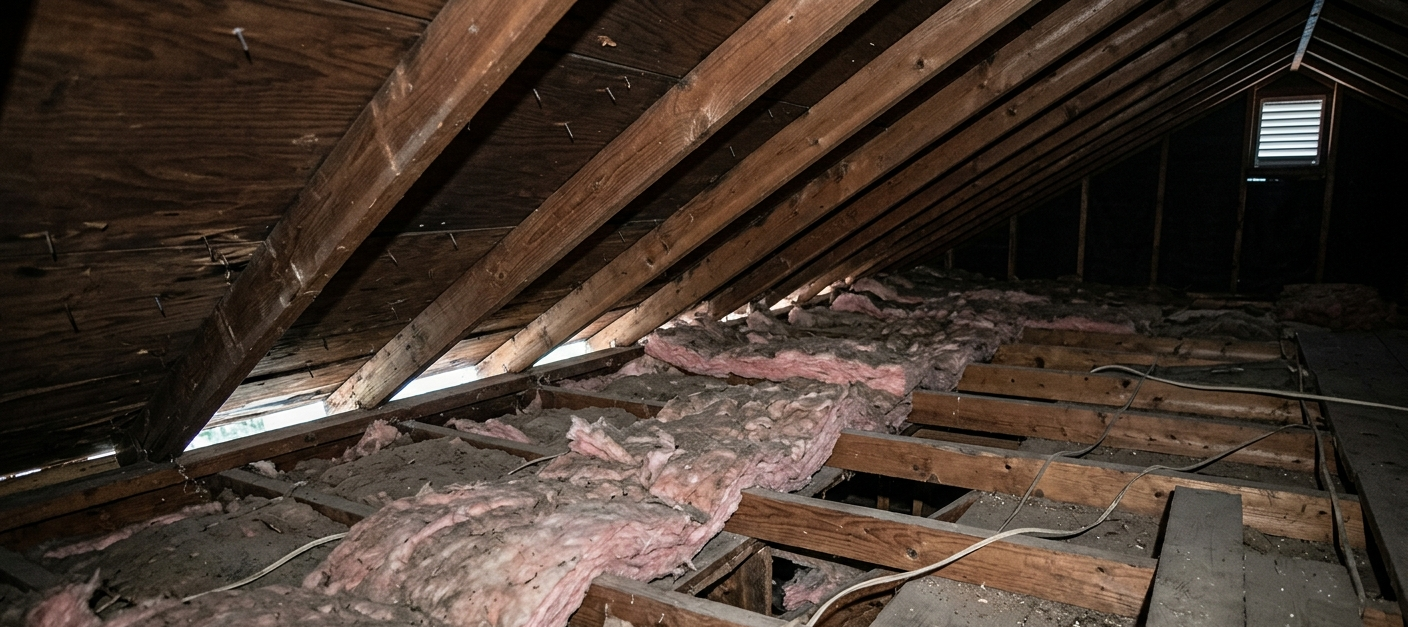
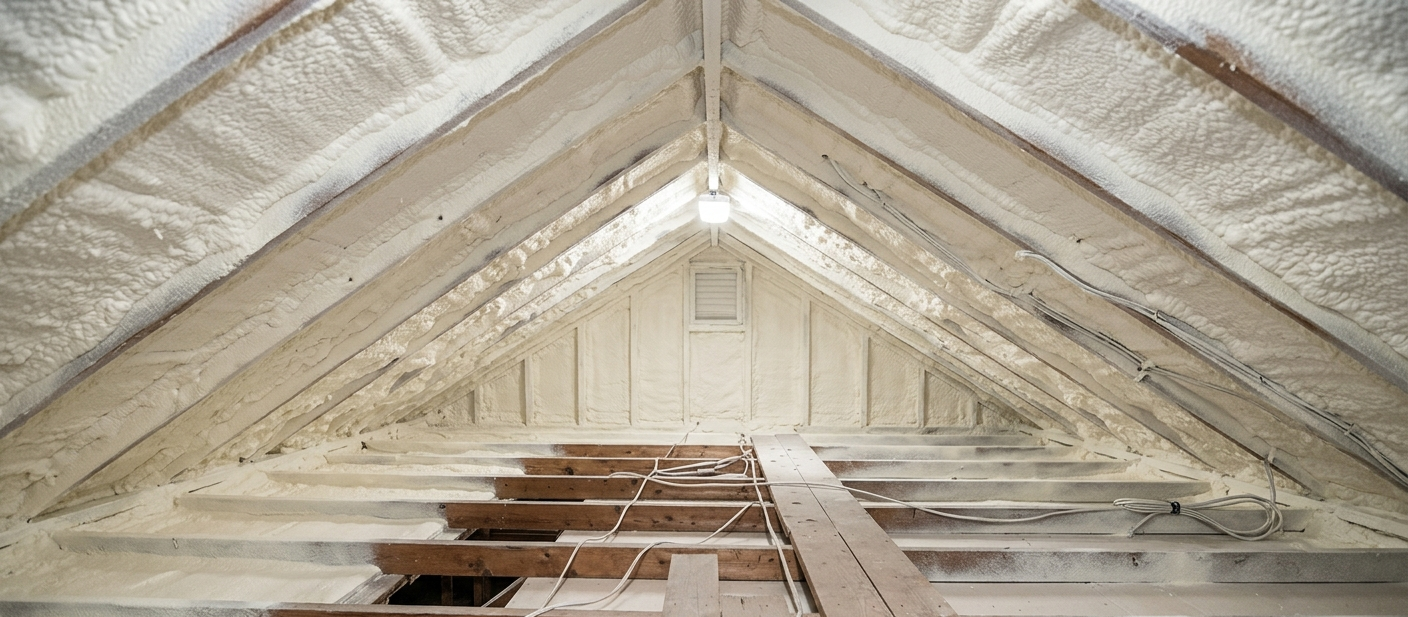
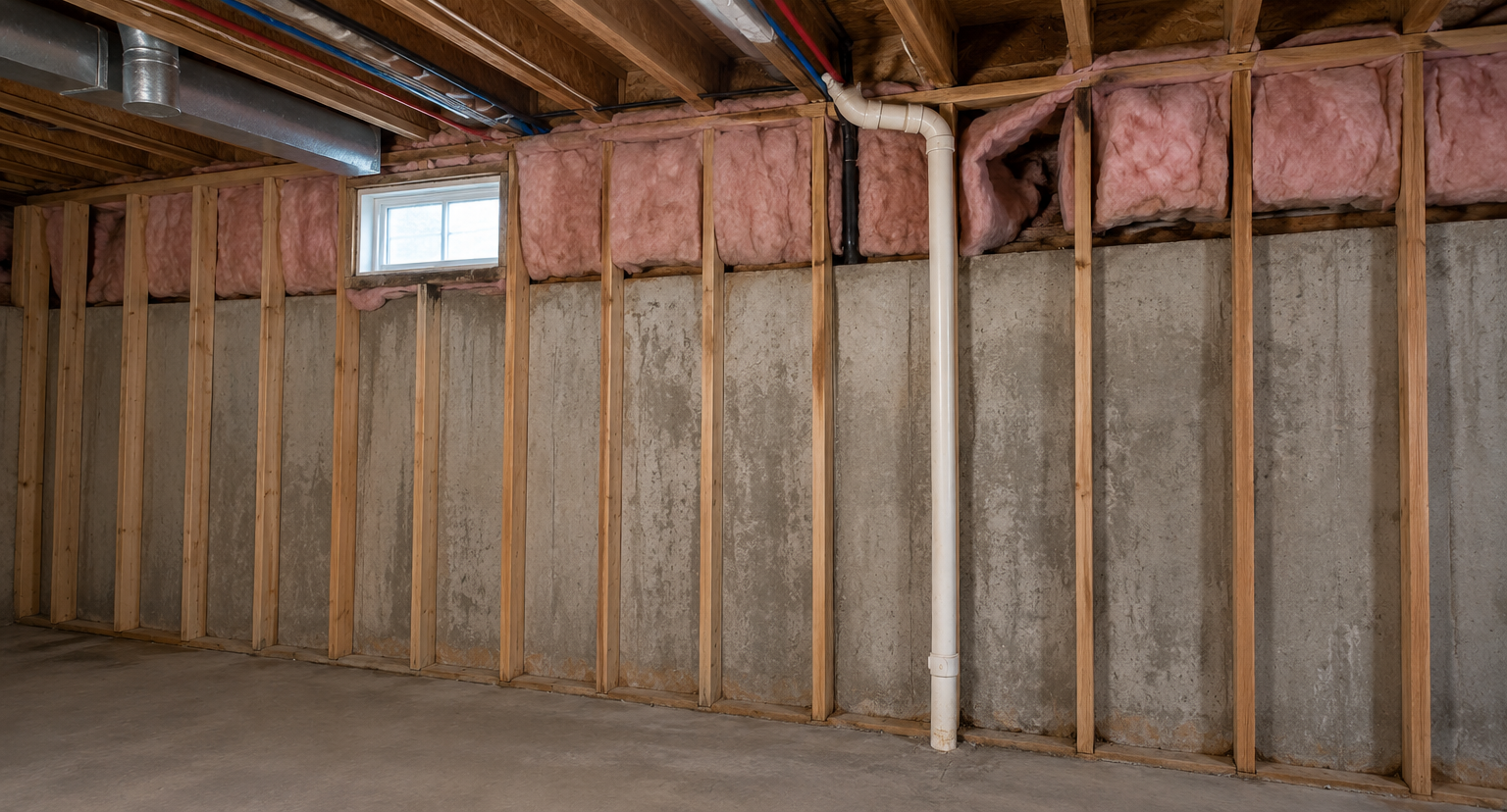
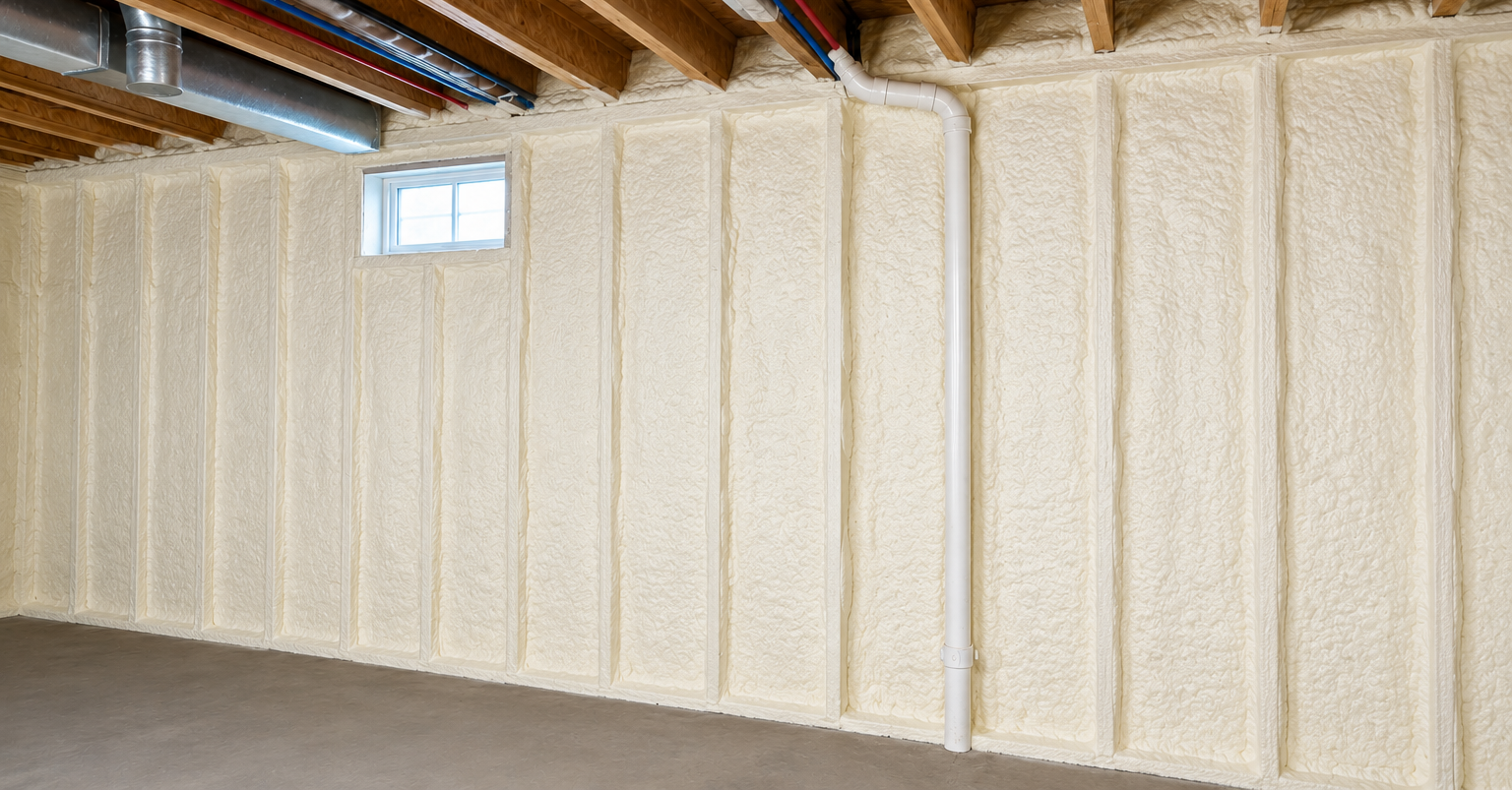
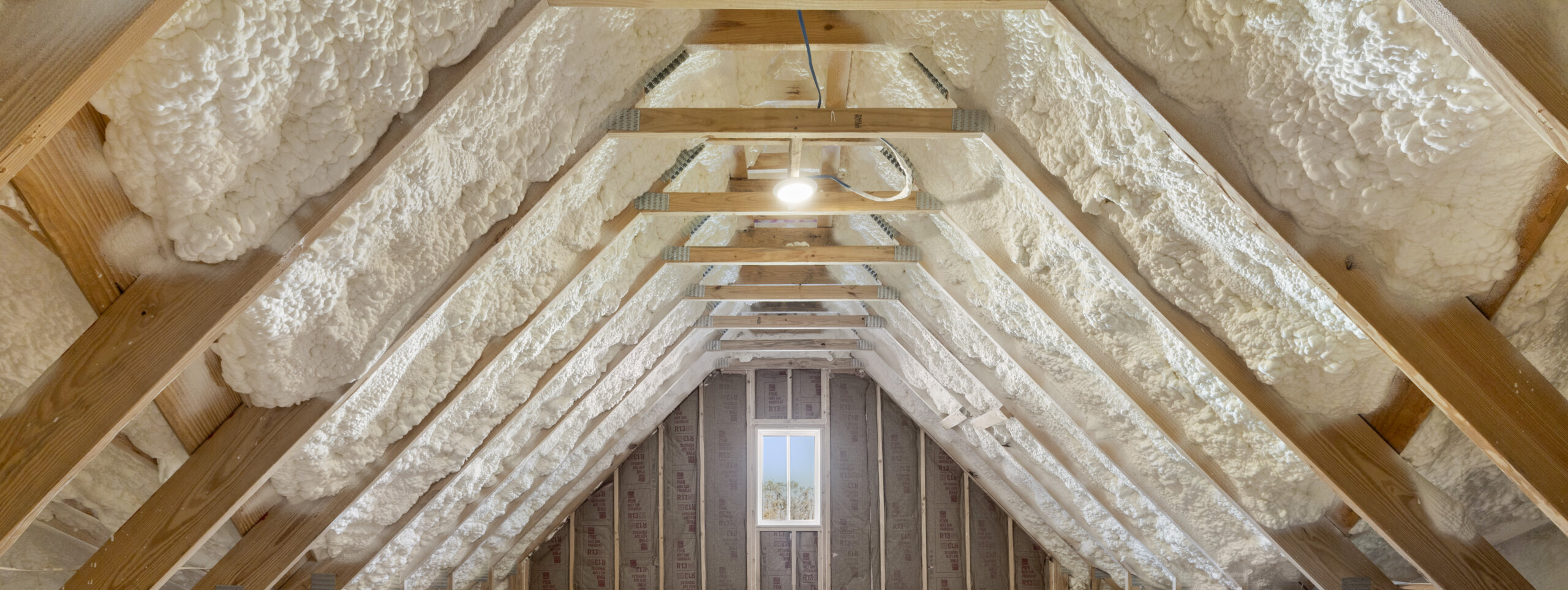
A look at what proper spray foam application looks like compared to gapped, settled, or missing insulation.
Gapped, compressed batt insulation replaced with a continuous spray foam layer sealing every rafter bay.
Closed-cell foam applied to rim joists and foundation walls to stop drafts and moisture intrusion.
A lot of Sudbury homeowners hesitate on spray foam because of outdated or incomplete information. Here's what's actually true.
Spray foam does cost more upfront than fiberglass batts — that part's true. But it's a one-time install that doesn't sag, compress, or need topping up every few years the way older insulation does. Homeowners typically weigh that upfront number against a decade or more of lower heating bills, not against the sticker price alone.
Spray foam is created by combining two liquid components — an isocyanate and a polyol resin — that react on contact and expand into a solid foam. That reaction releases gases as it cures, which is why proper ventilation during and after installation matters. Once fully cured and the space has been allowed to off-gas, it's considered safe and stable for the life of your home.
Air sealing is actually the point — uncontrolled drafts are what waste your heating dollars. A tightly sealed home doesn't mean a stagnant one: your HVAC system, or a supplemental mechanical ventilation system if needed, handles fresh air exchange, so you get the efficiency of a sealed envelope without sacrificing air quality.
From attics to crawl spaces, we insulate the areas of your home that lose the most heat and let in the most moisture.
Seal your roofline and stop heat loss at the source — the number one place Sudbury homes lose warmth in winter.
Get a QuoteStop cold floors and condensation by sealing rim joists and foundation walls with closed-cell foam.
Get a QuoteKeep moisture, pests, and cold air out of crawl spaces with a continuous spray foam barrier.
Get a QuoteBuilding or renovating? We work with builders and contractors on wall cavity spray foam applications.
Get a Quote
We know Sudbury's housing stock and its climate — from older homes in the core to newer builds out toward Val Caron and Lively. Every quote is based on what your home actually needs, not a one-size-fits-all package.
We'll assess your space and give you a clear, honest quote before any work begins.
We respond within 24 hours and work around your schedule, including weekends.
No surprise fees. You'll know the full cost before we start any work on your home.
From the city core out to the surrounding communities — if you're in the Sudbury area, we cover it.
We use up-to-date spray foam application equipment and follow manufacturer-backed techniques, so the finished job performs the way it's supposed to — not just on install day, but for years after.
We carry insurance on every job and stand behind our installs — you're covered from the first estimate through to the finished project.
Spray foam typically costs more upfront than fiberglass batts, but it lasts longer without sagging or settling, and its air-sealing properties mean less heat loss over time. Most homeowners weigh the upfront cost against years of reduced heating bills rather than comparing sticker price alone.
Yes. Spray foam is made by combining two chemical components that react and expand on application. During curing, proper ventilation is used, and the space is left to fully off-gas before it's considered safe to occupy. Once fully cured, it poses no ongoing health risk.
Air sealing is actually one of spray foam's biggest benefits — it stops uncontrolled drafts. Your home's HVAC and ventilation systems (or a mechanical ventilation system if needed) are what manage proper air exchange, so a well-sealed home stays both efficient and healthy to live in.
Open-cell spray foam is lighter, more flexible, and commonly used in interior wall and attic applications. Closed-cell spray foam is denser, offers a higher R-value per inch, and adds more moisture and weather resistance — making it a common choice for basements, rim joists, and exterior applications in Sudbury's climate.
Yes — we serve all of Greater Sudbury including Val Caron, Chelmsford, Azilda, Garson, Lively, Coniston, Capreol, Skead, Wahnapitae, and Copper Cliff.
From the city core to the surrounding communities — if you're in the Greater Sudbury area, we've got you covered.
Book your free estimate before September 1st and lock in $250 off your spray foam install.
Fill out the form and we'll reach out within 1 business hour to confirm your appointment.
Your request has been submitted. We'll contact you within 1 business hour to confirm.